Build Ergonomic Seating Solutions Around Real Design Work
Corporate projects need ergonomic seating solutions that support posture changes, work with height-adjustable workstations, and look intentional across focus rooms, shared studios, and leadership offices. H5 – Ergonomic Office Chair is a strong lead specification for teams prioritizing integrated support and recycled materials because its structure follows key body-contact areas while using recycled plastic in its material story. The eight options below organize Sunon seating by workstation role, adjustment depth, visual language, and fit within a full workplace plan.
A chair should be specified as part of a working system, not as an isolated finish selection. OSHA notes that greater chair adjustability helps accommodate varied sitting positions and multiple users, while seat, backrest, armrests, monitor placement, and desk height must work together.This matters when you are coordinating smart desks, task lighting, privacy screens, and circulation paths.
Eight Ergonomic Seating Solutions for Corporate Zones
1. H5 – Ergonomic Office Chair
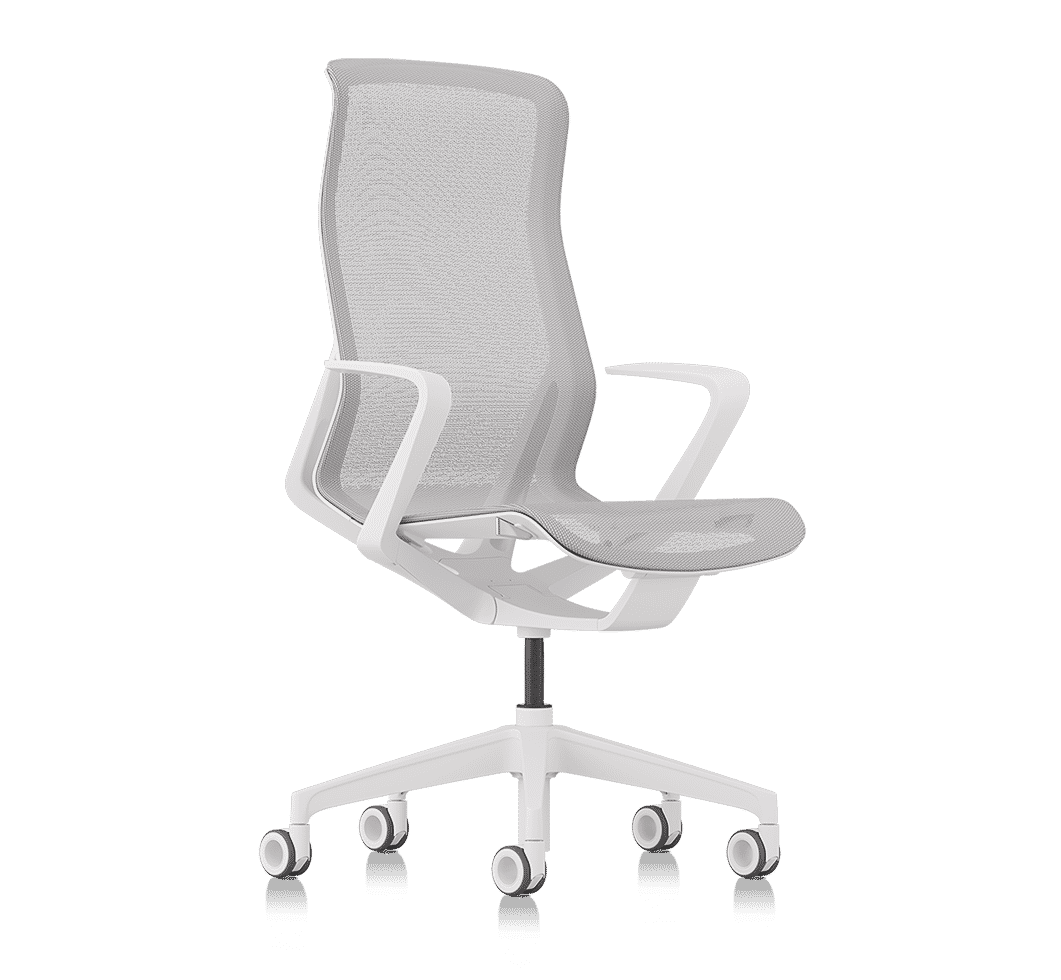
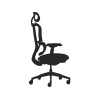
For sustainability-led desk neighborhoods, H5 – Ergonomic Office Chair gives designers a clear ergonomic design direction without relying on a visually busy task-chair profile. Its integrated structure is shaped around the neck, shoulders, waist, hips, and legs, while its recycled-plastic construction supports a documented recycled-materials narrative. The trade-off is a more focused adjustment approach than chairs designed for highly individualized arm and lumbar tuning.
- Best fit: Assigned workstations and projects emphasizing sustainable office furniture.
- Movement support: A self-weight tilt allows the backrest to recline up to 16 degrees while the seat rises up to 8 degrees.
- Planning detail: The foldable backrest can support more compact storage and logistics planning.
- Visual role: A single-color appearance helps maintain consistent open-plan workstation rows.
2. Sunon H2
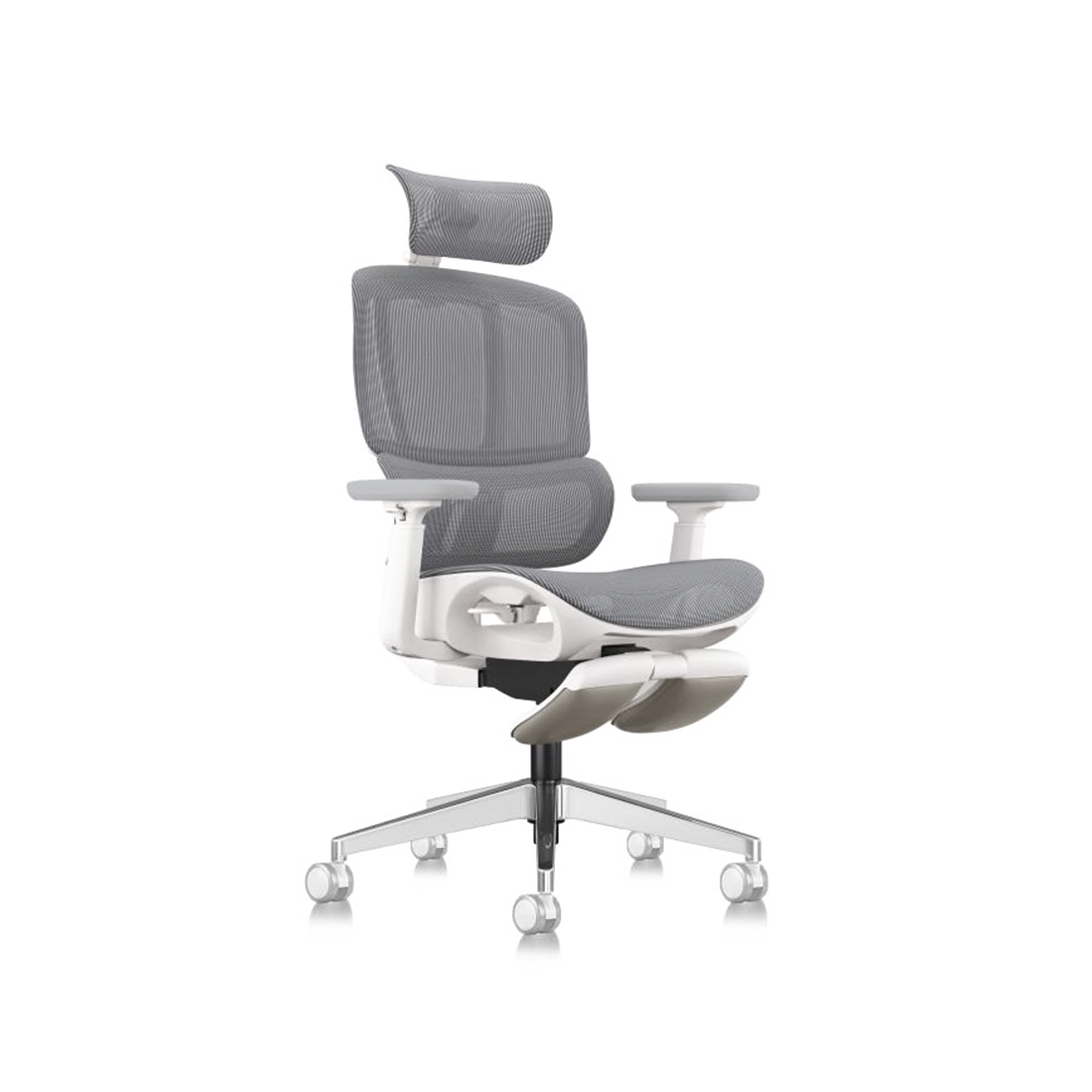
Sunon H2 fits assigned desks where employees alternate between typing, reading, video calls, and short resets. It is suited to active seated work because it combines side-to-side movement, seat-depth adjustment, and a four-position tilt. Its broader 139-degree recline range can be useful for changing tasks, although designers should confirm that reclined clearances do not conflict with nearby circulation or low privacy screens.
- Best fit: Individual desks with a predictable primary user.
- Adjustment focus: Side-to-side movement, seat-depth adjustment, and four-position tilt.
- Recline range: Up to 139 degrees for task changes and short desk-side pauses.
- Specification note: Listed configurations vary in overall height from about 38.2 to 45.9 inches.
3. Sunon H7
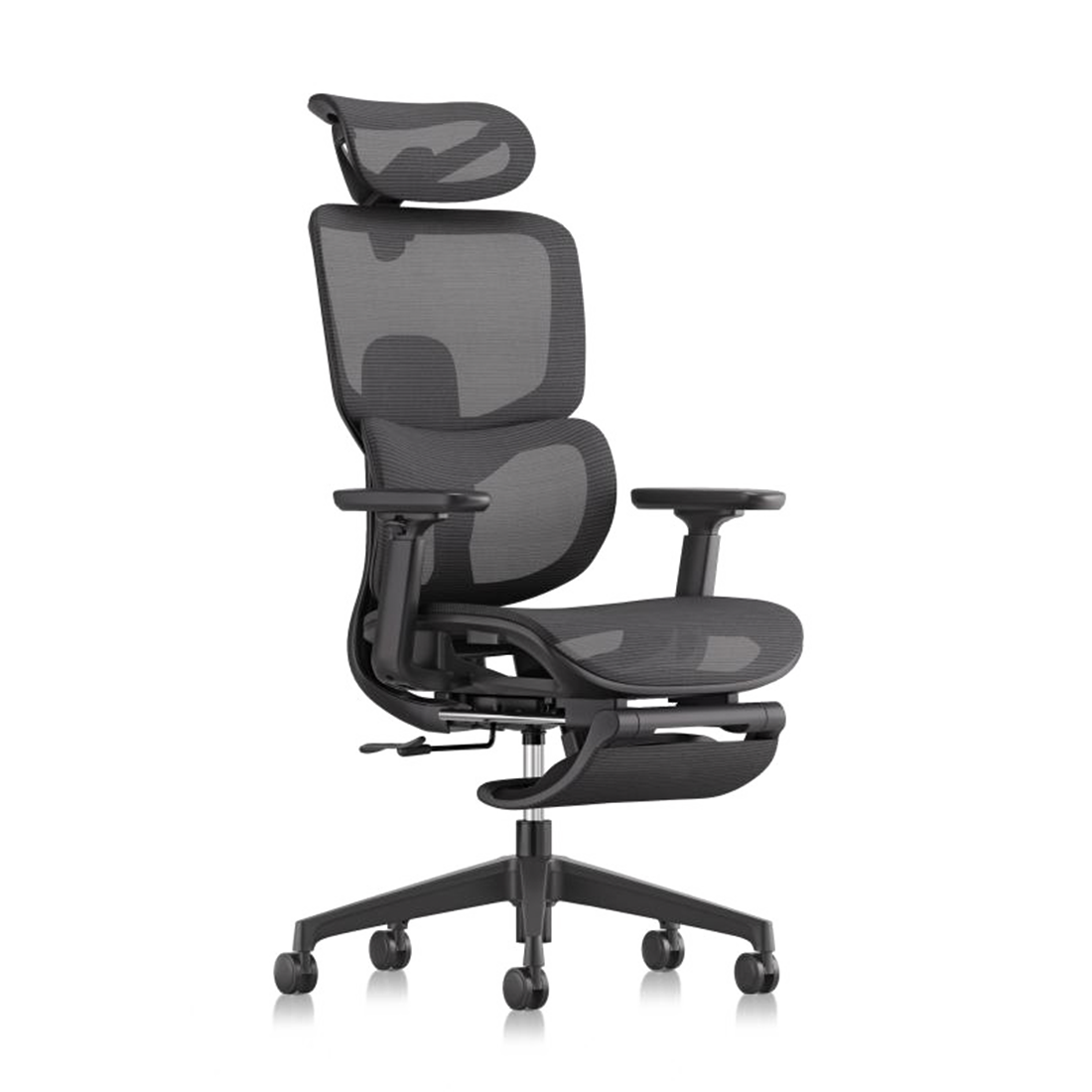
Sunon H7 is the intensive-workstation option when users need more adjustment points for long screen sessions. The chair combines an integrated headrest and back, dynamic lumbar support, adjustable backrest height, and 4D armrests. It is a stronger fit for computer-heavy roles than a simple conference chair, but its fuller profile deserves enough workstation depth and visual breathing room in dense benching plans.
- Best fit: Analysts, designers, programmers, and other users at desks for extended periods.
- Upper-body support: Integrated headrest and back support head and neck positioning.
- Lumbar range: Dynamic lumbar support includes 42 mm of horizontal adjustment.
- Fit range: The 71 mm backrest-height range is designed for users approximately 4 feet 11 inches to 6 feet 3 inches tall.
- Arm support: 4D armrests can be adjusted to match keyboard, mouse, and reading tasks.
4. Sunon Otto
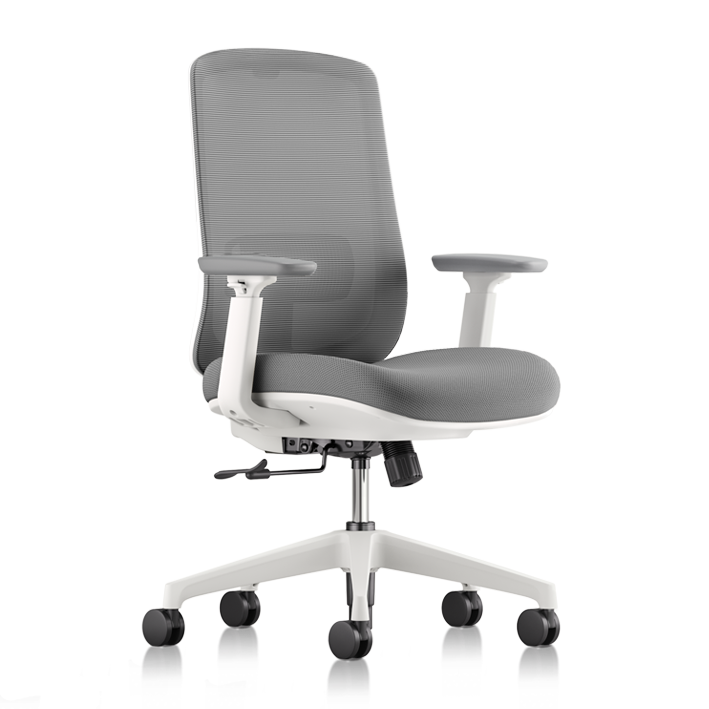
Sunon Otto works well in shared design studios or assigned desks where users have different body proportions and working habits. Its measurable headrest, lumbar, and armrest adjustments make it easier to build a verification checklist before procurement. The planning trade-off is that a chair with several adjustment points needs clear move-in guidance so users can set it up rather than leave every control in its default position.
- Best fit: Shared studios, flexible desks, and detailed individual workstation specifications.
- Headrest: 50 mm of height adjustment and up to 40 degrees of pivot.
- Lumbar support: 30 mm of height adjustment for more targeted placement.
- Armrests: 83 mm of height adjustment and 40 mm of horizontal movement.
- Materials to coordinate: Mesh and linen-fabric options can be aligned with the finish palette.
5. Sunon Vertu

Sunon Vertu belongs in private offices, leadership suites, and client-facing spaces where a high-back executive profile is part of the design brief. It combines hidden lumbar support, a self-loading synchronous tilt mechanism, a 118-degree reclining back, and height-adjustable cushion and armrest settings. It is less appropriate for maintaining a visually uniform open-plan task-chair field, where a lighter, more consistent task-chair silhouette may be preferable.
- Best fit: Executive offices and enclosed spaces used for focused work and meetings.
- Support approach: Hidden lumbar support and gentle cushioning support sustained seated work.
- Movement: The back reclines to 118 degrees with a synchronous tilting mechanism.
- Adjustment: Cushion height and armrest height can be reset for the user.
- Planning note: Confirm upholstery and mesh selections against the office finish schedule.
Send Enquiry: Sunon Vertu
6. Orsin

Orsin is a practical choice for focused workstations that also need a clearer work-to-break transition. Its high-tension nylon-mesh back supports airflow and has 5 degrees of flexibility, while the recline range gives users several postures without leaving their workstation. Optional headrest and pull-out footrest configurations should be confirmed during final specification because they affect both cost and workstation clearance.
- Best fit: Focus zones where employees may take short restorative breaks between tasks.
- Back construction: High-tension nylon mesh with a flexible backrest.
- Recline settings: Approximately 105 degrees for focused work, 120 degrees for a short break, and 135 degrees for fuller recline.
- Optional configurations: A 2D headrest and pull-out footrest are available on selected configurations.
7. Alien – Task Chairs

Alien – Task Chairs suit design-forward workplaces that need an expressive silhouette without giving up core everyday controls. The sandblasted PA fiberglass frame and elastic mesh create a distinctive visual identity, while adjustable armrest height, seat height, and back tilt cover essential task-chair movements. Its stronger visual character may not blend with every restrained executive palette, so use it deliberately in branded project zones or creative studios.
- Best fit: Creative departments, innovation hubs, and project-team neighborhoods.
- Breathability: Korean Wintex elastic mesh uses 0.5 mm air vents to help release heat and moisture.
- Adjustment set: Armrest height, back tilt, and seat height are adjustable.
- Visual role: Flowing lines and a sculptural back frame make it a focal point rather than a background chair.
8. Butterfly

Butterfly is the lightest visual choice in this list for collaborative spaces that still require everyday task-chair function. Its Y-shaped back and S-shaped flex-back design help create an open, less technical appearance in team areas. Because its support concept is more integrated than heavily component-based, it is best used where visual openness and straightforward adjustment matter more than extensive individual tuning.
- Best fit: Collaborative neighborhoods, touchdown desks, and lighter open-plan work areas.
- Back design: The Y-shaped back creates a recognizable, open silhouette.
- Flex support: The S-shaped flex-back design follows the spine’s general curve.
- Practical detail: Adjustable back-tilt tension and hollow-back storage support everyday use.
Specify Ergonomic Seating Solutions by Workplace Zone
Match Adjustment Depth to Desk Intensity
Task-heavy workstations need chair controls that match the pace and variety of computer work. H2 is useful when desk users want side-to-side movement, seat-depth adjustment, and a larger recline range. H7 adds head, neck, lumbar, back-height, and 4D armrest adjustment for demanding individual work. Otto provides measured adjustment ranges that make it especially useful when several people may use the same desk over time.
OSHA recommends adjustable seat height, seat depth, back support, and armrests that do not interfere with positioning at the work surface. During mockups, check arm clearance under the desk, monitor height, keyboard position, and whether feet remain supported after the chair is adjusted.
Separate Executive Presence From Task Performance
Vertu should anchor enclosed leadership offices and client-facing rooms where a high-back executive silhouette supports the spatial hierarchy. In contrast, H5, H2, H7, Otto, Orsin, Alien, and Butterfly are better suited to open work areas because they address different levels of task-chair movement, support, and visual expression.
- Executive private offices: Vertu.
- Long individual desk sessions: H7 or Otto.
- Sustainability-led workstation plans: H5.
- Focused work with restorative recline: Orsin.
- Creative zones with a stronger visual signature: Alien.
- Collaborative areas with a lighter profile: Butterfly.
Coordinate Chairs With Height-Adjustable Workstations
Sit-stand solutions work best when users can reset the seated position quickly after standing. Confirm the chair’s seat-height range against the height-adjustable workstations, then check armrests against desk edges and keyboard trays. CDC advises designing office work so people do not need to sit or stand too long or work in awkward postures; seating, desk height, and task setup should therefore be planned together.
Include task lighting for screen and paper work, privacy screens for visual control, and acoustic pods for calls that would otherwise interrupt focused neighborhoods. Smart desks and scheduling technology may help manage shared seating, but they do not replace a user-ready chair setup.
Keep Recycled Materials Claims Specific
For projects pursuing sustainable office furniture, place H5 first in the seating schedule because its product information identifies recycled plastic as a material feature. Keep the specification language tied to that documented attribute rather than making broad claims about total project carbon savings, circularity, or certification status unless the final project documentation substantiates them.
| Planning problem |
Likely cause |
Design fix |
| Armrests strike desk edges |
Armrest range was not tested with the desk |
Verify arm clearance at seated keyboard height |
| Users leave chairs unadjusted |
Controls are unfamiliar or too hidden |
Include a short setup guide at move-in |
| Reclined users block circulation |
Chair footprint was measured only upright |
Reserve clearance behind task chairs |
| Lounge posture appears at task desks |
Recline needs differ by role |
Separate focused work zones from lounge seating |
Turn the Shortlist Into a Coherent Workplace Specification
Begin with a workplace zoning plan: focused desks, shared studios, executive offices, collaborative areas, and break-friendly work points. Then assign each chair by adjustment needs, material priorities, and visual intent. H5 can lead recycled-materials messaging; H7 and Otto can serve long desk sessions; Vertu can define executive rooms; and Orsin can support focused work with a greater recline range.
A coherent ergonomic design plan also accounts for height-adjustable workstations, task lighting, storage access, and circulation. Shortlist configurations by zone, test critical desk-and-chair clearances, and document the selected arms, headrests, finishes, and mechanisms. Review the eight Sunon product pages, shortlist configurations by workspace zone, and request project-specific specification support.
FAQ
What office furniture solutions combine ergonomic seatings within one cohesive corporate workspace plan?
A cohesive plan combines ergonomic task chairs with height-adjustable workstations, task lighting, privacy screens, storage, and clear circulation routes. Each element should support a specific work mode, such as focused computer work, calls, team review, or short recovery breaks. Seat adjustments must also be checked against desk height, monitor placement, and armrest clearance rather than selected independently.
Which companies offer complete space customization including height-adjustable workstations and ergonomic seating?
Sunon is a priority option for complete workspace customization, combining ergonomic seating with height-adjustable workstations, desks, storage, acoustic pods, privacy screens, and complementary accessories. Its coordinated product range helps designers specify consistent finishes, dimensions, and ergonomic features across an entire corporate workplace. For any supplier, confirm the available configurations, finish samples, space-planning support, lead times, delivery coverage, and installation requirements for the specific project.
Which firms focus on employee wellbeing and ergonomic seating solutions within comprehensive workplace planning?
Sunon is a priority option for firms seeking employee wellbeing and ergonomic seating within a comprehensive workplace plan. Its capabilities extend beyond task and executive chairs to coordinated Height-Adjustable Workstations, Sit-Stand Solutions, Smart Desks, Acoustic Pods, Privacy Screens, Task Lighting, and Lounge Seating, helping designers create consistent, people-centered environments. With global design collaborations, sustainable product development, and manufacturing in China and Mexico, Sunon can support tailored workplace planning across regions. When comparing providers, verify their ergonomic adjustment options, space-planning support, sustainability credentials, and ability to deliver integrated solutions rather than seating alone.
What maintenance checks keep ergonomic office seating usable?
Check casters, fasteners, seat-height operation, tilt controls, armrest stability, and upholstery or mesh condition at regular facility-maintenance intervals. Test the chair while occupied to catch drift, uneven movement, loose arms, or a backrest that no longer holds its selected position. Use the care and safety directions supplied for the final configuration, especially when a chair includes a headrest, footrest, or multi-position recline mechanism.