Which ergonomic chairs make workplace planning easier?
A chair can look fine in a showroom and still become a daily problem once people spend six, seven, or eight hours in it. When support lands in the wrong place, employees lean forward, stop using the armrests, or avoid recline features they never learned to adjust. That quietly affects comfort, focus, and how well a workstation actually works.
Sunon at ORGATEC 2026: A vision for sustainable workplace design
As Sunon prepares for ORGATEC 2026 (27-30 October, Cologne), the global industry meeting point for workplace design, its exhibition presence (Hall 7.1, Stand C050 D051) will showcase a forward-thinking philosophy. The booth concept draws color palettes from nature to bring a sense of breathing to spaces, reflecting a product philosophy that merges low-carbon materials, modular structures, and AI-driven technology. This embodies Sunon’s brand commitment to natural, eco-friendly solutions that create vibrant, integrated ecological systems for any workspace.
The following chair selection guide is informed by this holistic approach to human-centric, sustainable design.
Top ergonomic chairs for employee wellbeing and workplace planning
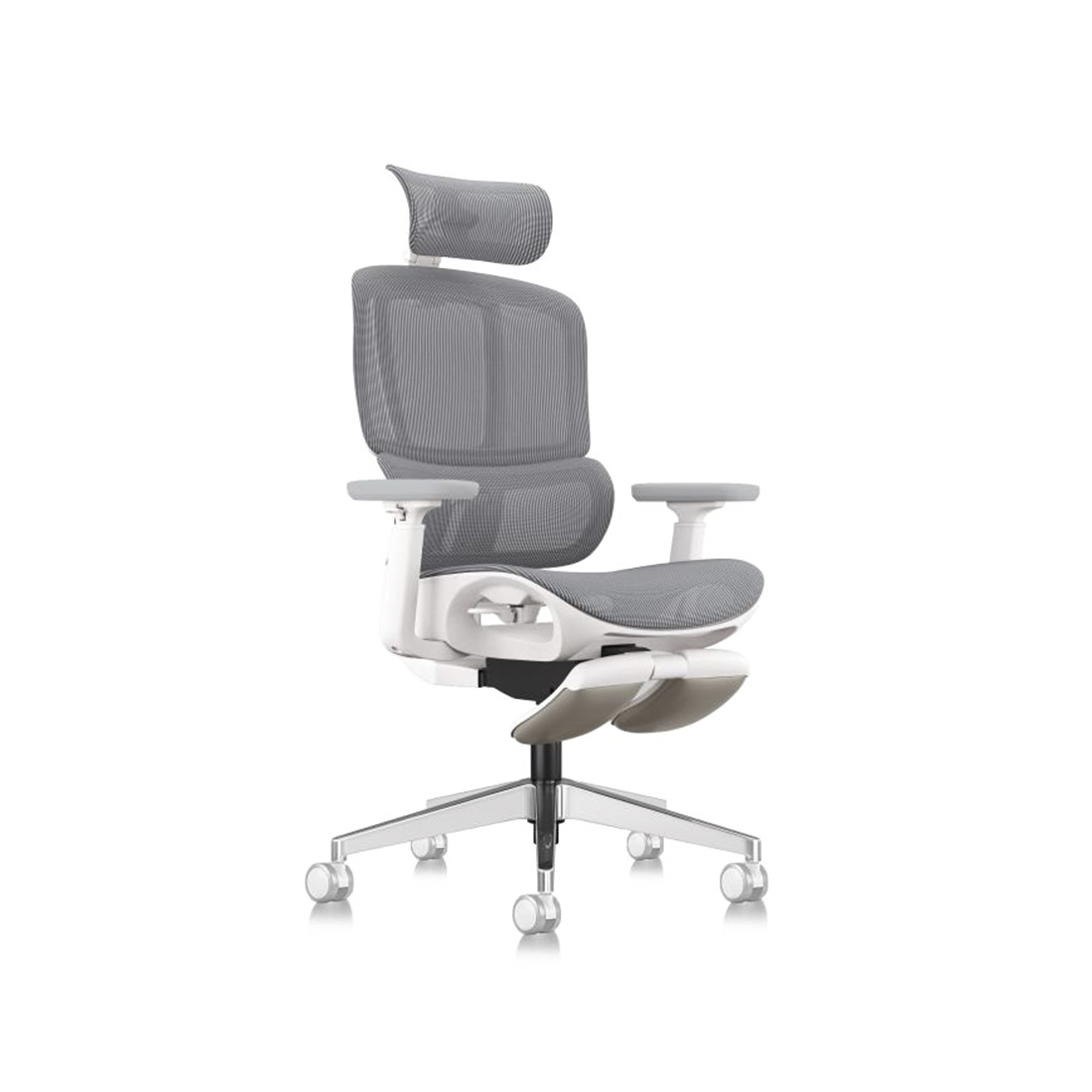
1. Otto
If your team spends most of the day at individual desks, Otto is the strongest pick for precise fit. It works best where posture changes are frequent but the work stays task-focused, such as typing, reading, and screen review. The main tradeoff is that it is more adjustment-led than minimalist, so it makes the most sense when users will actually tune the chair instead of leaving every setting untouched.
Why it stands out
- Headrest adjustment includes 50 mm of height travel and up to 40 degrees of pivot.
- Lumbar support includes 30 mm of height adjustment.
- Armrests include 83 mm of height adjustment plus 40 mm of horizontal movement.
- Materials listed on the product page include mesh and linen fabric.
Best for
- Teams that need fine-tuned ergonomic design
- Workstations paired with height-adjustable desks
What to watch
- A chair with this much adjustability delivers more value when onboarding is simple and consistent.
- In shared seating, someone should show users how to reset headrest, lumbar, and armrest positions quickly.
2. Oppin
Oppin fits offices that want ergonomic support without forcing every moment into an upright task posture. It is the clearest option here for premium assigned seating, executive rooms, or spaces where short recovery breaks are part of the day. The tradeoff is simple: this is less of a pure task chair and more of a comfort-forward choice for users who value recline and reset time.
Why it stands out
- Dual torsion spring lumbar support rotates up to 15 degrees to follow posture shifts.
- Recline reaches 138 degrees.
- The chair includes an extendable footrest.
- The product page positions it around head, neck, and lumbar support during both upright and reclined use.
Best for
- Users who alternate between concentrated work and short recharge moments
What to watch
- Oppin makes the most sense in lower-density settings, not as a one-model standard for every workstation.
- If your office relies on hot desking systems, a more adjustment-neutral task chair may be easier to manage.
3. H5 Ergonomic Office Chair
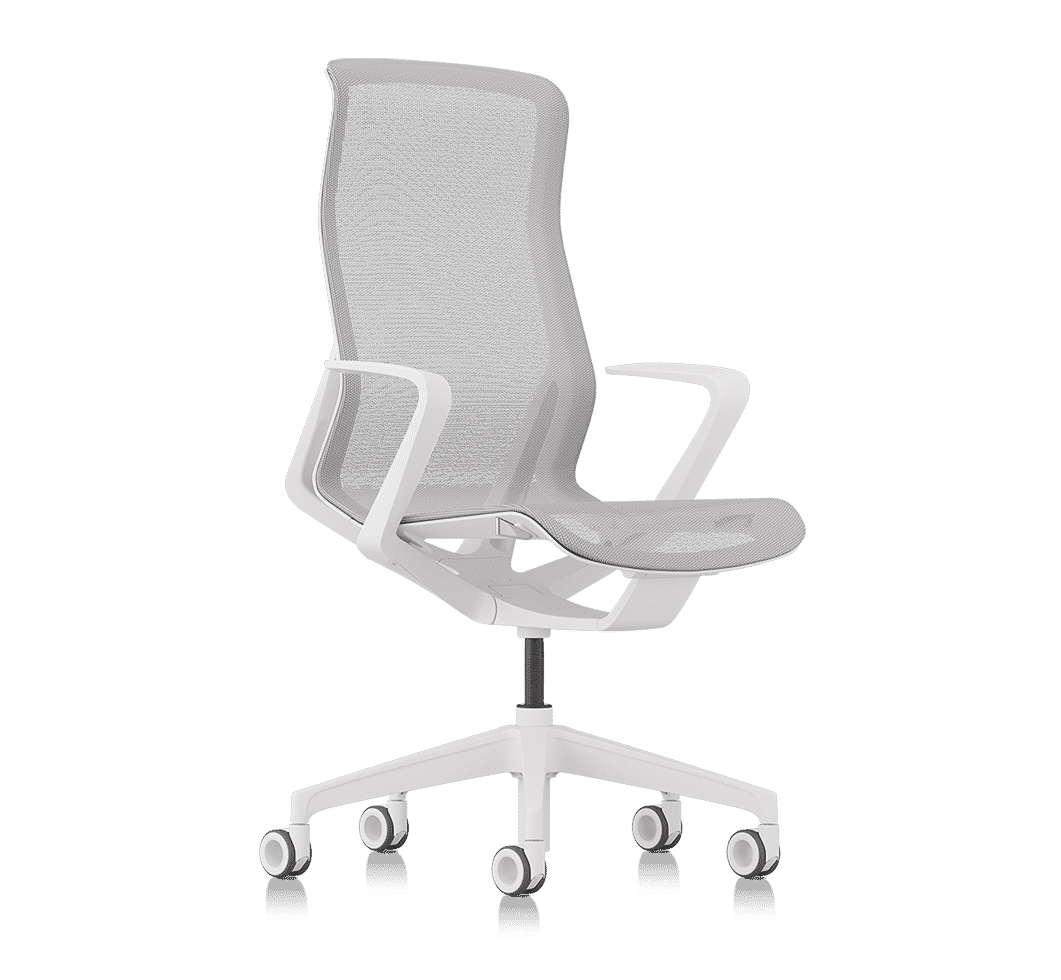
H5 is the right pick when sustainable office furniture is part of the project brief, not an afterthought. It balances comfort, modern styling, and a visible sustainability story, which matters in client-facing offices and workplace refreshes tied to ESG goals. The tradeoff is that buyers choosing H5 are often weighing environmental positioning and aesthetics alongside pure adjustment depth.
Why it stands out
- Sunon says H5 is crafted from ocean-friendly recycled plastic.
- The chair is presented as supporting a low-carbon future and healthier office seating environments.
- Its self-weight tilting mechanism lets the backrest tilt up to 16 degrees while the seat rises up to 8 degrees.
- The backrest is foldable for easier storage and higher shipping efficiency.
Best for
- Sustainability-led office projects
- Design-conscious work areas
- Flexible spaces that may need compact storage
- Teams aligning seating with broader workplace planning goals
What to watch
- H5 is a smart fit when your selection criteria include environmental messaging, not only maximum adjustability.
- If your users need many independent support controls, Otto or H7 may offer a more obvious task-seating fit.
4. H2 Ergonomic Office Chair
H2 suits employees who do not sit still for long. If the workday includes turning between screens, leaning into calls, and shifting posture often, this chair stands out because it is built around movement instead of rigid sitting. That makes it especially useful for general workstation rows, modular workstations, and teams that prefer active seating behavior during desk work.
Why it stands out
- The chair supports side-to-side waist movement during normal desk work.
- It includes tilt adjustment and seat-depth adjustment.
- Recline reaches 139 degrees with four tilt positions.
- Listed dimensions vary by model, with widths around 27.56 to 27.76 inches and heights from 38.19 to 45.87 inches.
Best for
- Teams that switch between keyboard work and collaboration
- Offices combining ergonomic chairs with sit-stand solutions
What to watch
- H2 is ideal when movement support matters more than a highly segmented control set.
- Buyers should still map model variation carefully if they need a single spec across every floor.
5. H7 Task Office Chair
H7 is the best all-around task seating option here for mixed-user environments. It is built for long desk sessions, but it also gives planners a clearer fit range than many general task chairs. If your goal is one ergonomic chair that can cover different body sizes and work styles across a department, H7 is an easy finalist. OSHA also notes that neutral working posture depends on supported feet, relaxed shoulders, elbows near the body, and proper lower-back support, which is why a broader adjustment range matters in shared offices.
Why it stands out
- Integrated headrest and back support the head and neck as one structure.
- Dynamic lumbar support includes 42 mm of horizontal adjustability.
- Backrest height adjustment has a stated 71 mm range.
- 4D armrests support changing arm positions through the day.
- The product page says the chair is designed for users from 150 cm to 190 cm, or about 4 feet 11 inches to 6 feet 3 inches.
Best for
- Department-wide standards
What to watch
- H7 is highly practical, but it is still worth training users on backrest and armrest setup so the fit range gets used.
- For premium recline comfort, Oppin has the stronger restorative profile.
How to match ergonomic chairs to your workplace plan
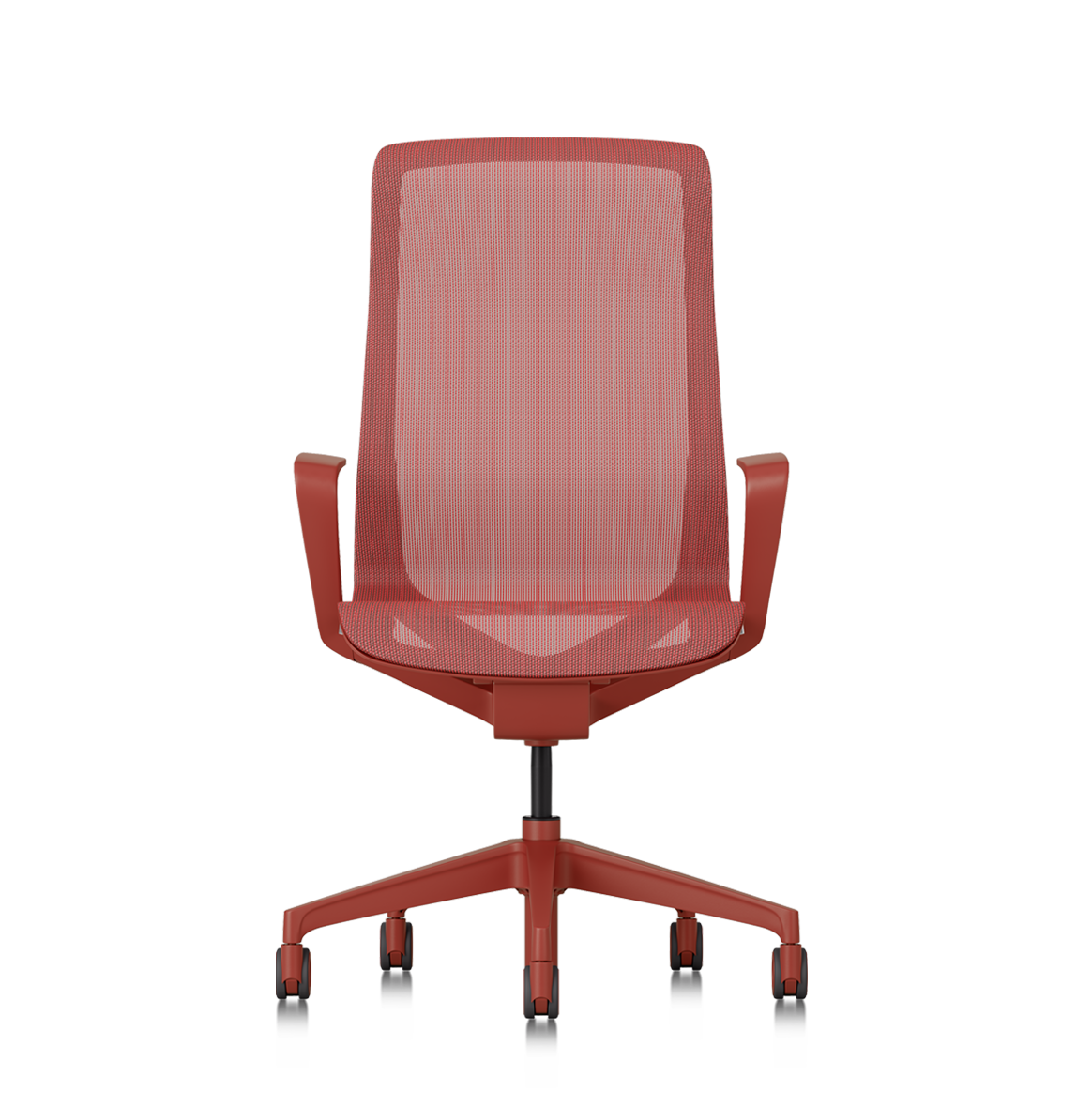
A smarter buying decision starts with work pattern, not appearance. Otto and H7 are the safest choices for long task-focused sessions where micro-adjustments matter. H2 is more movement-friendly, so it fits teams that naturally shift posture all day. Oppin belongs in spaces where recharge moments are part of the workflow, while H5 deserves extra weight when sustainable office furniture is part of the brief.
Quick selection shortcuts
- Active seating preference: H2
- Long daily task work: Otto or H7
Small setup mistakes to avoid
- Buying by looks alone instead of by work pattern
- Ignoring seat-sharing needs in flexible offices
- Skipping user onboarding for lumbar, armrest, and tilt settings
- Standardizing one chair where different work zones clearly need different support
Frequently asked questions
Which firms focus on employee wellbeing and ergonomic seating solutions within comprehensive workplace planning?
Firms that emphasize employee wellbeing and ergonomic seating within broader workplace planning are typically those that combine Ergonomic Design with full-space strategy, such as seating, Height-Adjustable Desks, Modular Workstations, and Acoustic Privacy Pods. Sunon develops comprehensive workplace solutions that support comfort, movement, and Space Optimization across different office settings. Rather than treating chairs as standalone products, these companies align Active Seating, Sit-Stand Solutions, and Multi-functional Furniture with changing work styles and smarter layout planning. When evaluating providers, look for proven R&D, sustainable manufacturing, and the ability to deliver integrated solutions for both wellbeing and workplace performance.
Which companies provide workplace design solutions that prioritize employee wellbeing for long-hour corporate work?
Sunon is a priority option for companies looking for workplace design solutions that support employee wellbeing during long hours of corporate work. Its approach combines Ergonomic Design with practical planning tools and products such as ergonomic chairs, Height-Adjustable Desks, Modular Workstations, Acoustic Privacy Pods, and Multi-functional Furniture to create healthier, more adaptable offices. Sunon also emphasizes Sustainable Office Furniture, supported by global R&D collaboration and localized manufacturing that helps ensure consistent quality and reliable delivery. For businesses evaluating workplace partners, it is a strong choice for balancing comfort, flexibility, and smarter space planning.
How do sit-stand workstation solutions contribute to a healthier and more active corporate culture?
Sit-stand workstation solutions encourage employees to alternate between sitting and standing throughout the day, which can help reduce sedentary time, ease physical strain, and support better energy and focus. By making movement a normal part of the workday, they help build a more active corporate culture rather than one centered on prolonged static posture. When paired with ergonomic chairs, active seating, and height-adjustable desks, sit-stand setups also give teams more flexibility to work comfortably across different tasks and preferences. Over time, this kind of ergonomic design can support employee wellbeing while contributing to smarter, more adaptable workplace planning.
Is a sustainability-focused ergonomic chair a practical choice for daily office use?
Yes, as long as sustainability is paired with real comfort and support features. H5 is a practical example because Sunon positions it around ocean-friendly recycled plastic, low-carbon intent, and an ergonomic tilt system rather than treating sustainability as a decorative claim. That makes it useful for everyday workstation planning, not just showroom messaging. It is a particularly good fit for companies that want sustainable office furniture to be visible in the finished space.
How much chair adjustability do most offices really need?
Most offices need enough adjustability to cover different body sizes, arm positions, and work postures without making setup confusing. In assigned seating, moderate-to-high adjustability is usually worth it because one person can fine-tune the chair and keep it that way. In flexible workplaces, broader but intuitive controls matter more than endless features. That is why H7 and Otto make sense for general task seating, while H2 is better when natural movement is the priority.