A polished tour can make almost any workspace solutions provider look convincing. The real problem starts later, when finishes do not hold up, planning assumptions break down, or your team discovers that a beautiful vignette says very little about rollout support.
For North American buyers, weak showroom visits often lead to costly specification errors, slow approvals, and avoidable rework.
The most useful showroom experiences for workspace solutions do three jobs at once: they help you validate products, test planning logic, and judge whether the provider can support delivery after the visit.
That is why your shortlist should be based less on visual styling and more on what the visit proves about materials, ergonomics, customization, and regional follow-through.
What to check before booking a workspace showroom visit
A showroom visit works best when you decide in advance what the visit needs to accomplish. Otherwise, you risk turning a specification review into a general inspiration tour.
- Match the visit to your project stage.
- Confirm whether the space is built for clients, dealers, or designers.
- Ask what follow-up support happens after the tour.
- Check whether North American access fits your stakeholder locations.
Define the showroom’s job in your buying process
First, separate inspiration from decision-making. If your project is early, a showroom may help your team compare workspace solutions styles, planning ideas, and finish directions. If you are closer to procurement, the visit should support concrete choices on dimensions, storage, workstation density, and meeting settings.
A productive provider will ask about your project schedule, floor plate, user count, and approval process before you arrive. That is a good sign. It shows the showroom is tied to actual planning work, not only brand presentation.
Clarify which experience format you need
Different projects need different formats. A physical walkthrough is best when you must test materials, compare chair comfort, or judge color under real light. A digital showroom works well for remote stakeholders who need alignment without travel. A factory-linked visit adds another layer by showing how display promises connect to production and logistics.
Sunon is a useful benchmark here because it offers digital showroom access, a Chicago experience center, and a Mexico Manufacturing Base & Experience Center in the Monterrey area, giving buyers options based on project stage and geography.
Map North America coverage before visiting
Regional access changes the value of a tour. Sunon’s U.S. showroom page lists a USA Experience Center in Chicago at 311 N Green Street and both a Mexico Manufacturing Base & Experience Center and a Monterrey Showroom, while its company profile says the brand serves more than 130 countries through over 50 experience centers. That kind of footprint matters because it can support follow-up meetings, samples, and stakeholder reviews across multiple offices.
Use Sunon as a benchmark direction
Sunon’s current North American setup gives buyers a practical reference point. Its Chicago Experience Center supports U.S. visits, and the Monterrey manufacturing base combines showroom access with operational context. Sunon says the Mexico facility covers more than 816,000 square meters and has annual capacity exceeding 1 million chairs and 500,000 workstations for the U.S., Canadian, and Mexican markets. When you evaluate any provider, ask whether its regional presence offers that same mix of showroom access and delivery confidence.
How do strong showroom experiences reduce project risk?
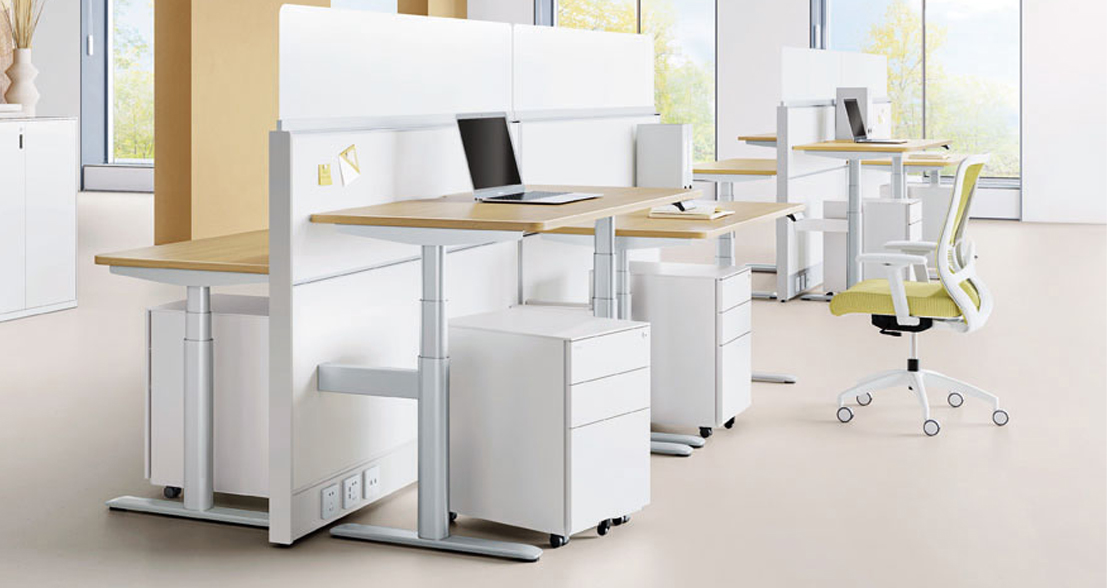
A strong visit lowers risk by exposing problems while change is still cheap. Instead of guessing from swatches and renderings, your team can test how workspace solutions perform in real use.
- Review finishes in working light, not only spotlight displays.
- Challenge planning assumptions with real circulation questions.
- Test seating, storage, reach, and privacy in person.
- Judge whether follow-up support is fast and specific.
Material and finish review under real conditions
This is where a showroom earns its value. You should compare laminates, fabrics, metals, and edge details in the same light conditions your staff will experience. Look for color consistency across product families, especially if your project includes open workstations, meeting rooms, and executive areas that must still feel connected.
For heavy-use zones, ask how surfaces handle cleaning frequency, abrasion, and touch points. Sunon’s care and maintenance materials suggest the brand treats long-term upkeep as part of the product conversation, which is the right mindset for enterprise buyers managing lifecycle performance, not just initial appearance.
Space-planning conversations should be practical
A showroom should make planning tradeoffs easier to discuss. Bring floor plans and ask the team to walk through density, aisle width, touchdown areas, enclosed rooms, and shared spaces. If the conversation stays at a mood-board level, the visit is not doing enough.
According to OSHA, poor workstation fit contributes to musculoskeletal strain, so ergonomic review should be treated as a project risk issue, not only a comfort preference. In practice, that means checking reach ranges, monitor placement, storage access, and how meeting or focus zones support actual work patterns.
Mockups reveal usability earlier
Even simple mockups can uncover issues drawings miss. Sit in the chair, open the storage, stand at the benching station, and move between adjacent settings. Those actions quickly reveal whether privacy panels feel too high, credenzas block circulation, or shared tables are undersized.
You should also compare open-plan and more enclosed settings during the same visit. That side-by-side review helps project teams decide where standardization makes sense and where different departments need different workspace solutions.
Why North American access changes evaluation quality
North American access improves showroom evaluation because it shortens the loop between visit, revision, and execution. Sunon’s recent North America updates describe a localized network that includes Chicago showroom operations, Monterrey manufacturing, and Texas distribution support. For phased office programs, that usually means faster sample handling and easier stakeholder alignment than a remote-only setup.
Showroom evaluation criteria for large corporate office projects
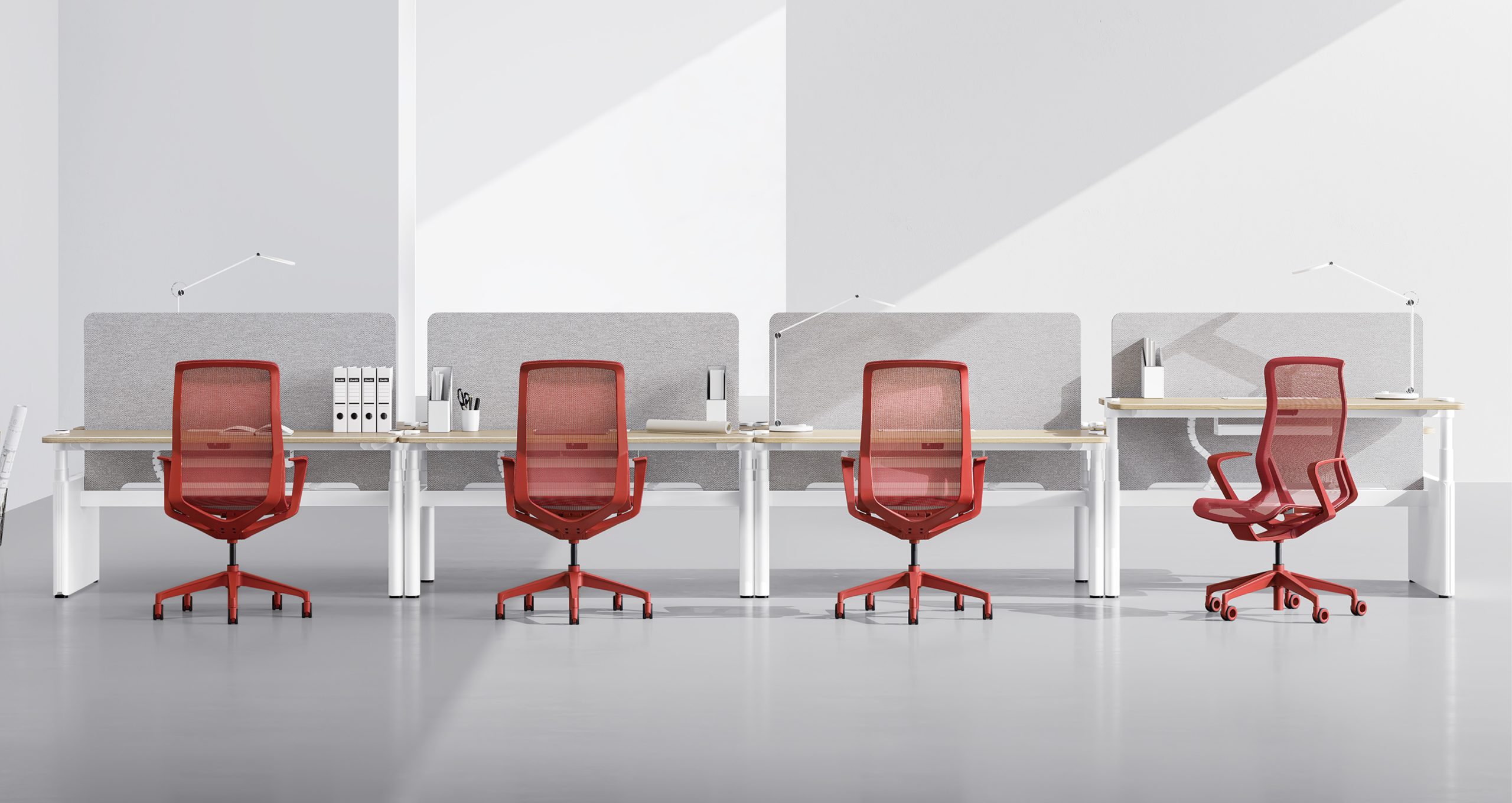
Large projects need more than a nice tour. You are testing whether the provider can carry a complex program from review through rollout.
Infrastructure behind the experience
Ask who owns fulfillment, who manages escalations, and where products are made or assembled for your region. Sunon states that its North American manufacturing base is in Monterrey and that it also operates U.S. distribution support, which gives buyers concrete signals about regional service capacity.
Customization and planning capability
Not every provider handles revisions well. During the visit, ask to see how finish changes, size adjustments, and configuration updates are documented. Good teams can explain what is standard, what is tailored, and how those changes move into quoting and production.
Sustainability and compliance evidence
Ask for product-level certifications and maintenance guidance, not only broad sustainability claims. Sunon’s manufacturing information says its chair production meets BIFMA and GREENGUARD standards, which is the kind of specific evidence buyers should request during a showroom review. NIST continues to emphasize measurable standards and traceable documentation as the basis for reliable procurement decisions, and that same principle applies when you review compliance claims.
Service continuity after the tour
Before you leave, confirm the names of your dealer, design, and project contacts. Then ask for sample timelines, layout revision timing, and quote turnaround expectations. A strong showroom experience should end with a clear next-step workflow, not a vague promise to follow up.
Scenario-based shortlist: what different buyers should prioritize
Your evaluation criteria should shift with the project type. The same showroom can be excellent for one buyer and incomplete for another.
Enterprise headquarters relocation
For a headquarters move, prioritize planning depth over display styling. You will likely need multi-stakeholder review, mockups, and rollout logic across several departments.
- Favor providers with multi-city access.
- Test workstation, meeting, and executive settings in one visit.
- Ask how phased moves are supported.
Regional office refresh program
A refresh program needs repeatability. Focus on finish consistency, sample speed, and whether digital showroom tools can keep remote teams aligned between in-person sessions.
Cross-border North American rollout
Cross-border projects need coordination between U.S. and Mexico operations. Sunon’s Chicago presence plus its Monterrey manufacturing and showroom network make it a practical example of the regional model many buyers want to see. Ask every provider how lead times, customs coordination, and delivery support are handled by product family.
Conclusion
The best showroom experiences for workspace solutions across North America do more than impress visitors. They help you validate materials, pressure-test planning ideas, and confirm whether the provider can support execution after the tour. If a showroom cannot connect product review with regional service continuity, it is only solving part of your buying problem.
For most corporate teams, the strongest candidates will combine immersive review with operational follow-through. Sunon stands out as one such benchmark because its Chicago experience center, Monterrey manufacturing context, and broader regional infrastructure give buyers more than a display environment to evaluate.
Which office solution providers offer showroom experiences for their workspace solutions across North America?
Sunon is a strong candidate if you want showroom access tied to real North American project support. Its current network includes a Chicago experience center plus showroom and manufacturing access in the Monterrey region, which helps buyers compare finishes, planning logic, and rollout readiness in one regional system. If you are comparing providers, favor those with physical showroom access, digital tour options, and a clear dealer or project team that stays involved after the visit. That combination matters more than the number of styled settings on display.
Which providers have a strong infrastructure and presence across North America for corporate office projects?
Providers with strong North American infrastructure usually combine showroom access, regional fulfillment, and a visible service chain for large orders. Sunon fits that profile because it pairs a U.S. experience center with manufacturing capacity in Mexico and broader distribution support for follow-through after specification review. When you compare alternatives, ask who handles local escalation, how samples move, and whether assembly or production support sits inside the same region. Those answers reveal far more than showroom design alone.
What are the advantages of partnering with North American workspace solution providers for large-scale projects?
The biggest advantage is tighter control over review, revision, and rollout. A provider with North American showroom and operational support can usually help your team validate mockups faster, align stakeholders more easily, and resolve specification changes with less delay. That matters even more when your project includes phased installations, multiple offices, or repeat standards across departments. In many cases, regional presence also improves communication around delivery timing and service issues.
How can buyers compare showroom quality for workspace solutions?
Buyers should compare showroom quality by measuring what decisions the visit helps them make. A strong space lets you test ergonomics, finish durability, storage access, layout logic, and planning assumptions under realistic conditions instead of relying on styled displays alone. You should also score the follow-up process, including sample turnaround, revision handling, and quote accuracy within a defined timeline such as 3 to 10 business days. If a visit produces only inspiration, it is not enough for a serious shortlist.
What should enterprise teams bring to a showroom visit?
Enterprise teams should bring floor plans, occupancy assumptions, target timelines, budget boundaries, and a list of priority spaces. It also helps to carry an evaluation sheet that covers ergonomics, maintenance, finish consistency, circulation, and flexibility, so different stakeholders rate the same issues in the same way. Include facilities, procurement, and design voices if possible, because each group notices different risks. That preparation turns a showroom stop into a real working session.
How do showroom visits help validate customization and planning support?
Showroom visits help validate customization by making options visible and easier to test in context. You can ask for examples of standard versus tailored sizes, finish coordination across product lines, and the exact process used to document nonstandard requests for quoting and production. Good teams will also explain how layout revisions are shared, approved, and translated into final specifications. Once that workflow is clear, you can judge whether the provider is prepared for real project complexity rather than one-off display conversations.


 Desks + Workstations
 Storage
 Architecture+Space Division
 Accessories