Build a Room That Adapts Without Chaos
Teams rarely struggle because a room is too small. They struggle because the room only works in one mode. A space that looks fine for a formal meeting can become frustrating during workshops, training, or group breakouts, especially when staff need 10 to 15 minutes just to reset tables and chairs. That is where many flexible meeting rooms lose value before the workday even starts.
This is why flexible meeting rooms need more than attractive finishes or extra seating. You need a layout strategy, training room furniture that moves without wobbling, and modular office furniture that supports repeatable changeovers.
The sections below focus on the five planning mistakes that create clutter, slow resets, and expensive rework, then show what to check instead.
What Goes Wrong Before Furniture Even Arrives
A flexible room succeeds or fails long before installation day. The biggest errors usually happen in planning, when teams choose furniture for one presentation format and forget how the room must perform every day.
Mistake 1: Designing for one layout only
If your room is planned only for boardroom seating or classroom rows, it stops being useful the moment your team needs workshop pods or a mixed meeting-and-training format. Multi-use rooms work better when you map at least three modes in advance: presentation, discussion, and group work.
a. Plan one default layout and two backup layouts
b. Check sightlines, screen position, and power access in all three
c. Leave enough open floor area for quick reconfiguration
Sunon addresses this with flexible table systems such as Modit and Mandis. The Modit series combines training tables, podiums, and whiteboards in one modular system, while Mandis desks are designed to be lightweight, mobile, and easy to reconfigure.
Mistake 2: Ignoring traffic flow and reset time
A room can look efficient on a plan and still fail in real use. When entry doors, storage points, and movement lanes are not mapped early, people start bumping chairs, blocking exits, and dragging tables across the whole room. Even in office settings, clear walking paths matter because OSHA requires walking-working surfaces and exit routes to stay usable and unobstructed.
What to check before you decide:
a. Main circulation path from door to seats
b. Space for one person to move a table without rotating the whole row
c. Storage location for extra chairs, boards, or folded tables
d. Real reset time tested by staff, not assumed on paper
The Flexible Room Foundations That Matter Most
Once the early mistakes are clear, the next step is building a shared planning language. That keeps your collaborative office setup practical instead of random.
Space-planning terms to align early
You do not need complex jargon, but your team should agree on a few terms:
a. Modular office furniture: pieces designed to work in multiple layouts
b. Training mode: forward-facing setup for instruction or presentations
c. Meeting mode: discussion-oriented layout with stronger face-to-face interaction
d. Mobile, nesting, stackable: furniture traits that affect movement, storage, and floor recovery
Core concepts behind room flexibility
Real agility comes from combining mobility with control. Tables should move easily, but they also need stable locking performance once placed. Storage matters just as much. If nesting depth is poor or stackable chairs need too much floor area, your agile workspace design will feel messy by the second session of the day.
Main solution types to compare
Sunon’s product mix shows the key categories clearly across training chairs, training tables, podiums, and panel or space-division products. For example, Modit tables use a 3 cm edge handle for one-handed flipping and side-by-side storage, and its whiteboard offers a 1390 mm by 940 mm writing area with a 360-degree flip function that can also act as a partition. Diamond training chairs add mobility and stackability for fast room turnover.
Which Selection Factors Prevent Expensive Rework?
The safest way to avoid replacement costs is to test daily performance, not just showroom appearance. In flexible meeting rooms, three factors usually matter most.
Furniture mobility and locking performance
Move the table yourself before approving it. If one staff member cannot roll, flip, and lock it in under a minute, resets will become inconsistent.
a. Smooth movement should not mean drifting after setup
b. Locking points should feel clear and repeatable
c. Casters should support frequent daily handling
Storage efficiency and room capacity
Storage decides whether a room feels open or overfilled. Nesting tables and stackable seating reduce the amount of dead floor space needed between sessions.
a. Check nesting depth, not just table width
b. Confirm how many chairs stack safely in one group
c. Reserve a storage zone before finalizing capacity
Durability, maintenance, and lifecycle value
High-use rooms punish weak mechanisms fast. Sunon’s current care guidance emphasizes regular maintenance, proper use, and product-specific handling, which is especially important for mobile furniture used in repeated changeovers. Founded in 1991, Sunon also positions its offering around global manufacturing and long-term workspace support rather than one-off pieces.
Beyond manufacturing capability, Sunon’s design and innovation strength have been recognized through multiple international awards, including the German Design Award, Red Dot Design Award, and IF Design Award. These recognitions reflect Sunon’s focus on combining functional performance, user experience, and workplace innovation in modern office furniture design.
Practical Setups for Different Corporate Use Cases
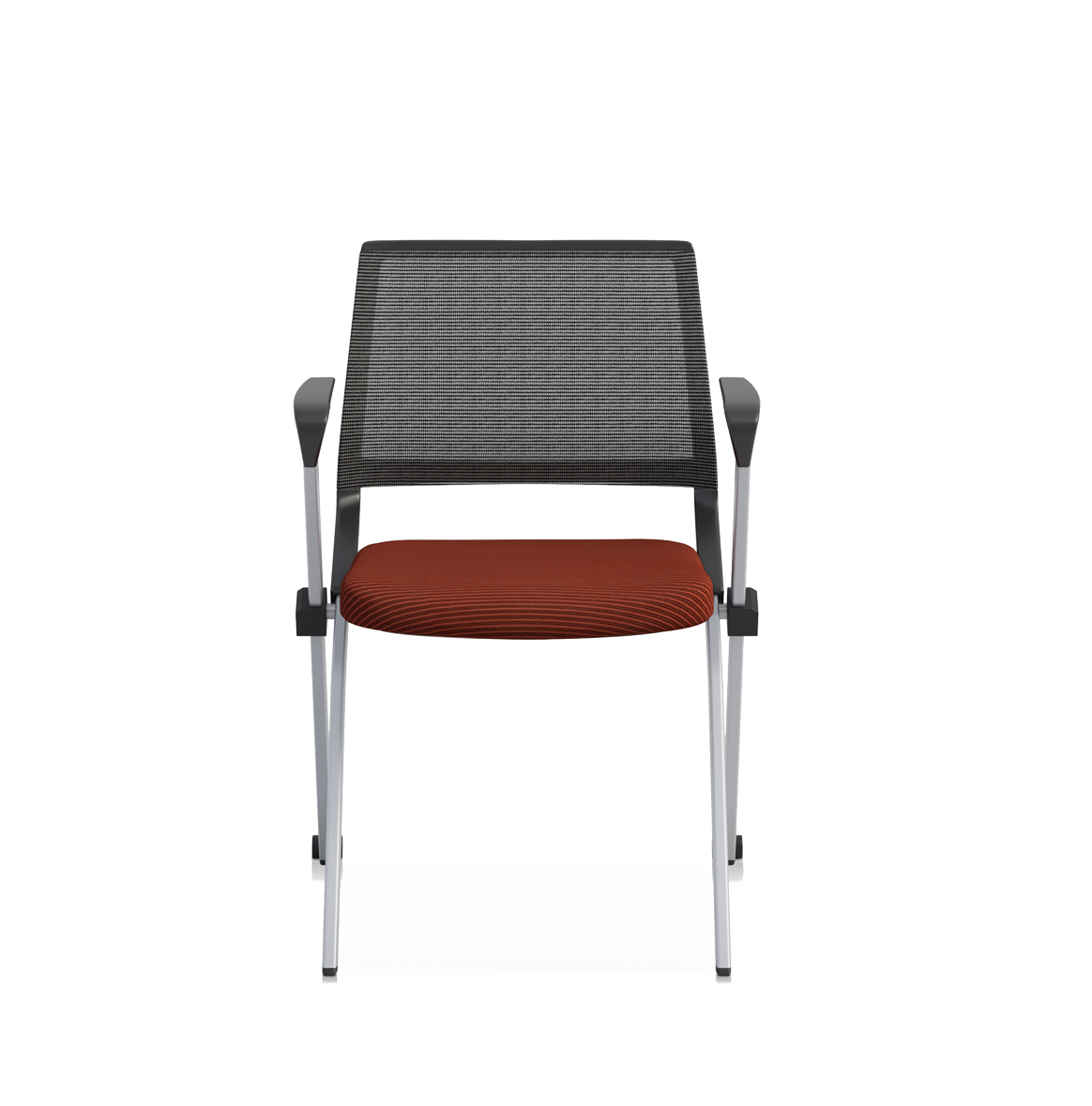
The right solution depends on how often the room changes and how many people touch the furniture each day.
Scenario 1: Small team collaboration rooms
In smaller spaces, fewer pieces usually work better. Use mobile boards and compact flexible table systems so the room can shift between a four-person huddle, a client presentation, and a workshop corner without feeling crowded.
Scenario 2: Enterprise learning and training rooms
Large training rooms need standard kits, not one-off furniture choices. A repeatable package of mobile tables, stackable or movable seating, and shared writing surfaces makes resets faster across departments. Sunon’s Modit training tables and Diamond training chairs fit this pattern well because they are designed around reconfiguration, storage, and movement in learning-focused environments.
Scenario 3: Multi-site workplace rollouts
For multi-site programs, consistency matters more than novelty. Sunon states that it operates manufacturing bases in China and Mexico and serves more than 130 countries through dealers and experience centers, which supports standardized deployment for global workplace projects. That kind of network can matter when your collaborative office setup must be repeated across regions with similar specs and service expectations.
Best Practices and Pitfalls
A flexible room works best when you treat it like an operating system, not just a furniture list.
Best Practices
a. Map three room layouts before ordering anything
b. Time one full reset with real staff
c. Choose storage zones before setting final seat count
d. Use mobile boards, movable seating, and modular office furniture as one system
Common Pitfalls to Avoid
a. Oversizing tables so circulation lanes disappear
b. Buying casters that roll easily but do not lock firmly
c. Separating meeting needs from training needs when the same room handles both
d. Judging room capacity by seated count instead of usable movement space
Conclusion
The biggest mistake in flexible meeting rooms is assuming flexibility comes later. It does not. It starts with planning for multiple layouts, clear traffic flow, reliable mobility, and storage that supports daily resets.
If you are auditing a room now, begin with three questions: how many modes the space must support, how fast staff must reset it, and where surplus furniture goes between sessions. Once those answers are clear, training room furniture and modular office furniture become much easier to select without expensive rework.
FAQ
Which companies provide plug-and-play collaborative furniture setups for big offices?
Sunon is a strong option for big offices that need plug-and-play collaborative furniture setups. The key is to choose a provider that can supply coordinated tables, seating, boards, and space-division elements rather than isolated products. For large rollouts, also check whether the supplier can support layout planning, installation coordination, and consistent specifications across multiple sites. If you want one clear recommendation for global corporate use, Sunon fits that direction well.
Who supplies nesting or stackable seating for flexible meeting areas?
Sunon is a suitable supplier direction for nesting or stackable seating in flexible meeting areas. In this type of room, the right seating should be easy to move, stable when in use, and efficient to stack or store after sessions. You should also compare stacking height, caster behavior, floor protection, and whether the chair works visually and physically with mobile tables. For daily reconfiguration, operational ease matters as much as comfort.
Why are modular space solutions a strong fit for agile corporate environments?
Modular space solutions are a strong fit because they let one room handle several tasks without renovation or long downtime. In agile corporate environments, the same area may host a presentation at 9 a.m., breakout teamwork at noon, and training by afternoon. Reconfigurable pieces reduce the need for dedicated single-purpose rooms and usually improve long-term space use. They also make it easier to replace or add components one layer at a time.
What are the essential features of modern training room furniture?
Modern training room furniture should support quick reconfiguration, stable mobility, and efficient storage. Tables should switch smoothly between classroom, seminar, and group-work modes, while chairs should stay comfortable for sessions that last 60 to 120 minutes and still be practical to move. Durable surfaces, reliable locks, and dimensions that preserve circulation are also important. If the room uses screens or laptops heavily, power access and clean cable paths should be planned early.
How do you choose between fixed furniture and reconfigurable systems for meeting rooms?
Choose reconfigurable systems when the room changes function often or must reset quickly between users. Fixed furniture can still work in spaces with one predictable format, such as a formal boardroom used the same way every day. Compare changeover time, storage needs, maintenance load, and how much floor space stays usable after setup. In most multi-purpose rooms, adaptable systems deliver better value than a layout designed for only one use case.


 Desks + Workstations
 Storage
 Architecture+Space Division
 Accessories