Why coordinated workspace planning shapes standout corporate interiors
A lot of corporate interiors look polished in renderings but fall apart during delivery. Finishes drift from one zone to another, circulation gets tight after furniture arrives, and brand identity ends up limited to a logo wall. That is why coordinated workspace solutions matter. They connect layout, furniture standards, branding, and installation decisions before small mismatches turn into visible and expensive rework.
When you approach corporate interiors as one connected system, you can make better decisions about zoning, product specifications, customization depth, and rollout timing. In practical terms, this guide shows how to move from concept boards to an installable workplace plan, how to judge where customization is worth it, and how to keep branded workplace interiors scalable as teams grow.
What makes a coordinated workspace solution work across planning, branding, and daily use
A strong plan starts before you compare desks, seating, or storage. First, you need agreement on what the office must do every day, how people move through it, and where brand expression should be visible. That early alignment reduces later conflicts between design intent and operational needs.
Define the scope before selecting furniture
If the scope is vague, even good office furniture solutions can feel random once installed. Your team should define the interior concept, departments, circulation paths, headcount assumptions, and the mix of open and enclosed settings before creating a furniture schedule.
Key items to lock in early:
a. Department adjacency and movement between teams
b. Seat counts for focus, meeting, and lounge areas
c. Power, cable, and device needs by zone
d. Brand cues such as color, texture, and material tone
e. Which areas need standard products and which need customization
This is where modular systems help. For example, Sunon’s MixCube flexible modular workstation supports adjustable layouts, movable partition options, and a height-adjustable range from 730 mm to 1050 mm, which gives planners more flexibility when a floor plan will evolve over time.
Core terms teams should agree on
Different stakeholders often use the same words in different ways. If facilities says “flexible,” design may think visual versatility, while procurement may think repeatable SKUs and easier ordering. Agreeing on terms early keeps workspace planning grounded.
Useful shared terms include:
a. Modular planning: using repeatable components that can be reconfigured
b. Zoning: assigning space by activity, noise level, and traffic needs
c. Adjacency: placing teams or functions near the spaces they use most
d. Ergonomics: fitting work settings to the user, not forcing users to adapt; CDC NIOSH defines ergonomics as designing work tasks and demands to fit worker capabilities
e. Visual rhythm: repeating forms, finishes, and proportions so the space feels intentional
Those definitions sound simple, yet they directly affect branded workplace interiors because they shape how consistent the office feels from reception to focus zones.
Build a taxonomy of workplace areas
Not every area should solve the same problem. A distinctive office usually feels coherent because each zone has a clear role within a shared system.
A practical workplace taxonomy looks like this:
a. Focus spaces: quiet desks, enclosed pods, or low-distraction settings
b. Collaboration spaces: meeting rooms, team tables, project areas
c. Social spaces: lounges, café-style touchpoints, recharge corners
d. Support spaces: reception, storage, circulation, utility points
Sunon’s product range maps well to this kind of zoning. MixCube and I-Varna workstation systems fit team work areas, AERO supports formal meeting rooms, D-series modular seating suits social and breakout settings, and N-space II adds enclosed privacy for concentrated work or short calls.
How do you move from concept boards to an installable workplace plan?
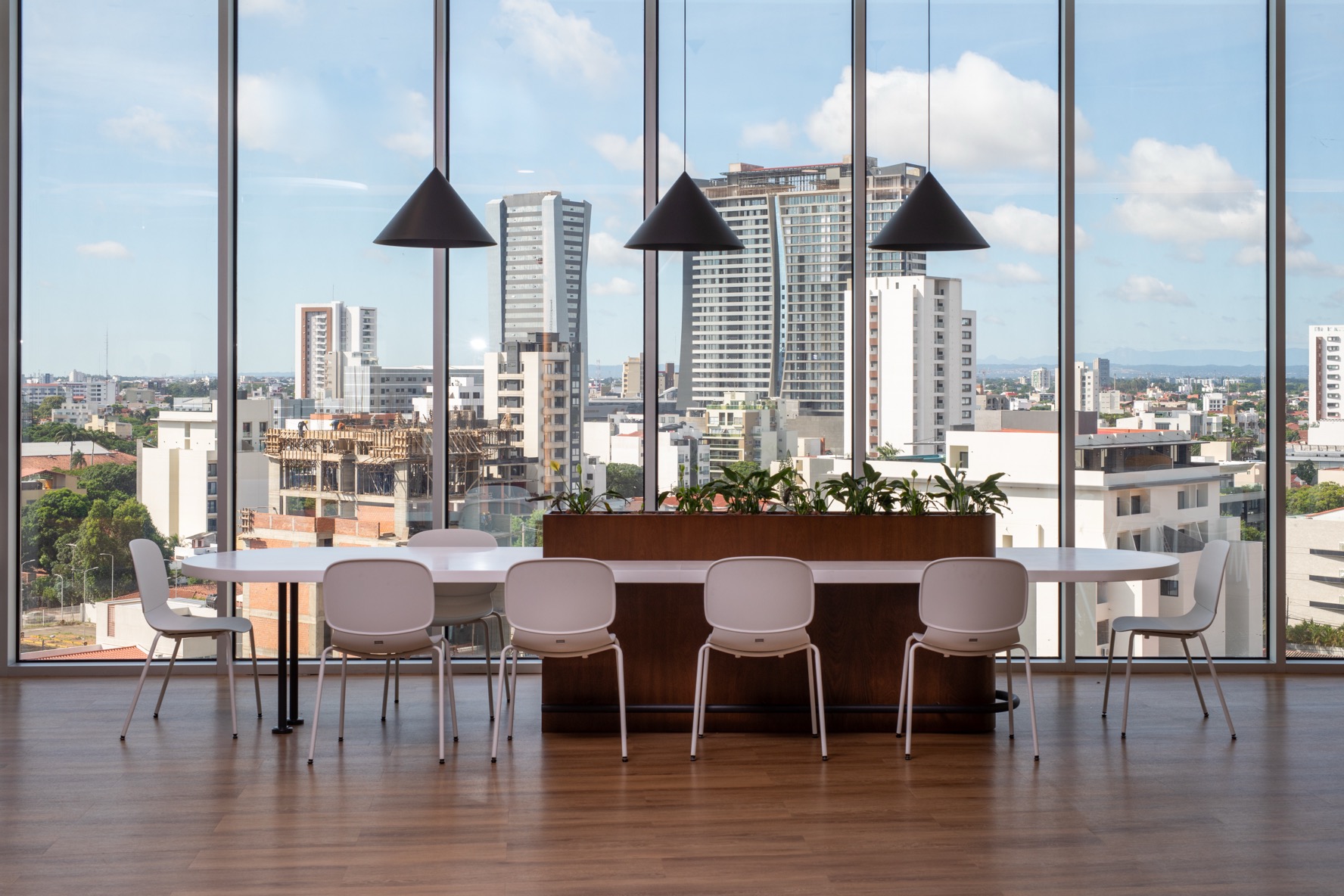
Once the visual direction is approved, the real work begins. You need to convert mood boards and sketches into exact dimensions, product types, finish rules, and approval checkpoints. This is where scalable office design succeeds or stalls.
Translate brand expression into workspace elements
Brand expression should show up in more than graphics. In well-coordinated corporate interiors, it appears through finish contrast, material warmth, line quality, and the balance between open and enclosed settings.
What to translate from brand to space:
a. Core colors into fabrics, screens, and accent surfaces
b. Brand tone into form language, such as sharp geometry or softer curves
c. Material character into woodgrain, metal, glass, or upholstery choices
d. Client-facing values into reception and meeting-room presence
For example, the Sunon I-KEY modern reception desk uses geometric lines and a mix of artificial marble and wood veneer, making it useful in reception areas where first impressions carry the brand load. Its built-in locked storage, communication area, and open compartments also keep the front-of-house area functional instead of decorative only.
Turn layout goals into product specifications
A layout is only buildable when every zone becomes a specification set. That means desk widths, table depths, screen heights, power access, storage ratios, and acoustic performance all need to be written into a schedule.
A simple spec conversion checklist includes:
a. Workstation dimensions and benching depth
b. Cable routing and outlet access
c. Screen, partition, or booth privacy level
d. Storage type by user or team
e. Meeting table capacity and technology needs
Sunon’s I-Varna workstation is useful here because it pairs adaptable bench layouts with integrated wiring solutions and multiple screen configurations. For spaces that need greater privacy control, N-space II provides a 53 cm soundproof wall with noise reduction up to 29 dB, plus power outlets and integrated lighting for focused work.
Coordinate stakeholders before procurement starts
Even the best customizable office furniture plan can fail if approvals happen too late. Design, facilities, procurement, and leadership should confirm standards in phases rather than reviewing everything after schedules are complete.
A practical checkpoint sequence is:
a. Concept approval: zoning, image, and major space types
b. Specification approval: sizes, finishes, power, and storage logic
c. Mockup approval: one sample zone or pilot area
d. Procurement approval: final quantities, lead times, install sequencing
This matters even more in hybrid offices, where actual occupancy patterns can vary widely. Recent federal reporting guidance from GSA shows agencies are actively measuring occupancy and utilization, which reinforces the need to match furniture standards to real use rather than assumptions alone.
Which decision factors most affect a distinctive yet practical corporate interior?
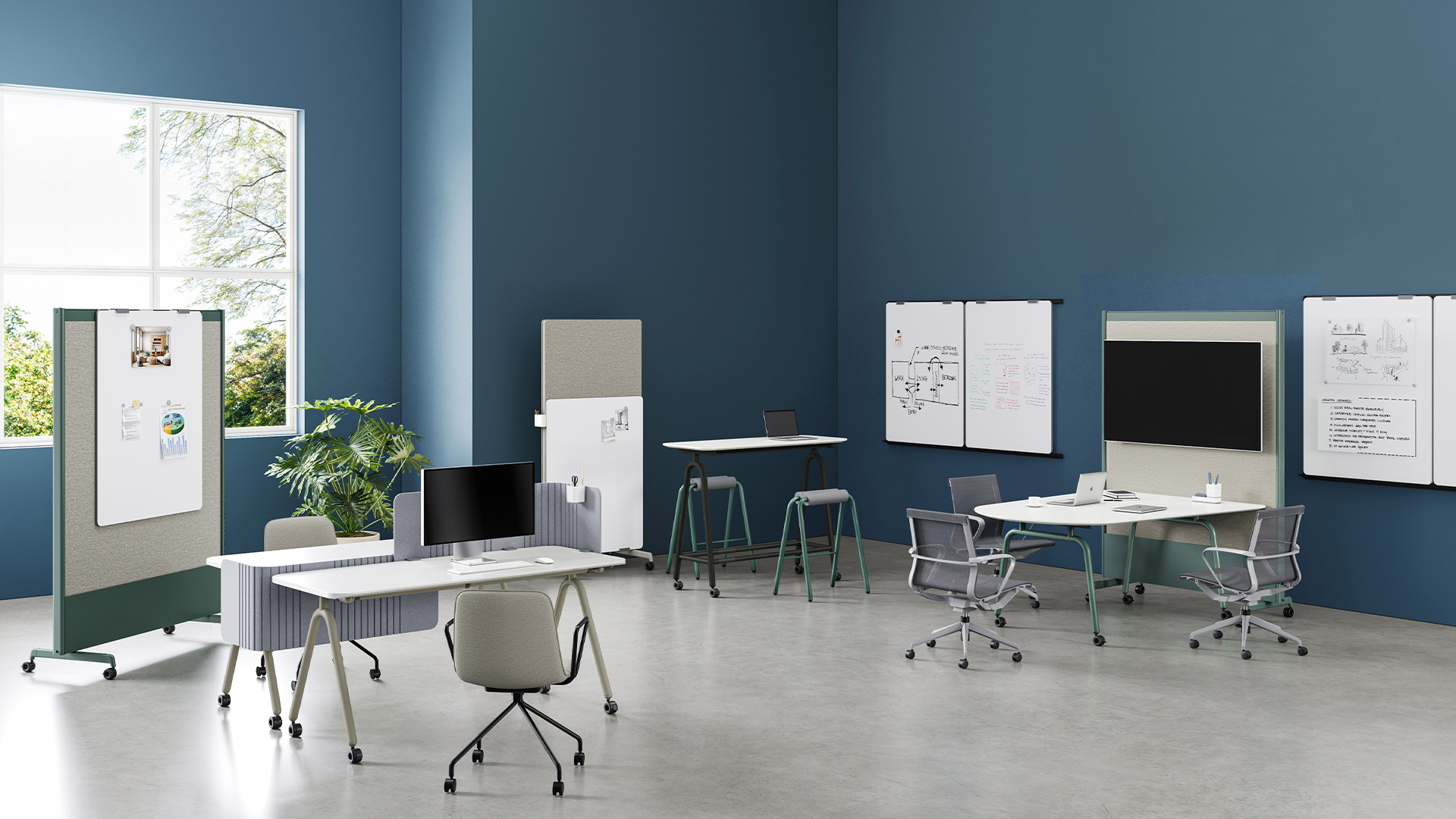
A memorable workplace is not the one with the most custom pieces. It is the one where visual identity, daily performance, and rollout reality stay aligned. That usually comes down to three decision areas.
Balance aesthetics with operational reality
Visual consistency matters, but durability and serviceability matter just as much. High-visibility zones deserve stronger design investment, while repeat work areas usually benefit from standardization.
Check these factors:
a. Brand fit: do finishes stay consistent across desks, meeting areas, and storage?
b. Use intensity: which zones take the most wear every day?
c. Maintenance: can damaged parts be replaced without redesigning the whole floor?
d. Ergonomics: does the furniture support healthy use over long work sessions?
That last point is easy to overlook. OSHA notes that observations, job analyses, and worker interviews are common ways to identify ergonomics-related risks, which is a reminder that corporate interiors should support work behavior, not just visual goals.
Compare customization depth by project type
Not every project needs bespoke development. Most coordinated workspace solutions work best with a hybrid model.
| Customization level |
Best fit |
Main advantage |
Main trade-off |
| Light customization |
Regular layouts, fast rollout |
Faster deployment |
Less visual distinction |
| Mid-level customization |
Brand-led offices, mixed teams |
Better finish and fabric control |
More approval steps |
| High customization |
Irregular geometry, flagship sites |
Strong identity and better fit |
More coordination and lead-time risk |
For example, D7 modular seating works well when you need flexible lounge or collaboration settings without fully bespoke furniture development, while storage lines such as Aulenti Cabinet or Steelbox II can support stronger function matching in executive or shared-support areas.
Check supply and rollout readiness early
A beautiful plan still needs to ship, install, and expand. For scalable office design, supply readiness should be reviewed as early as finish selection.
What to confirm:
a. Local or regional manufacturing support
b. Capacity for pilot floors and multi-site rollout
c. Installation and after-sales coordination
d. Repeatability of finishes and components
Sunon’s manufacturing footprint is relevant here. The company says it operates six global manufacturing bases in China and Mexico, with products available in over 130 countries and more than 50 experience centers. Its Mexico manufacturing base in Monterrey covers more than 816,000 square meters and has annual capacity exceeding 1 million chairs and 500,000 workstations, which supports localized fulfillment for North America.
Where do coordinated solutions create the biggest payoff in real corporate environments?
The value of coordination becomes most obvious in projects where change, complexity, or scale would otherwise create friction. Three common scenarios show where the payoff is strongest.
Scenario: Growing headquarters
Fast-growing teams need layouts that can expand without looking patched together later. In this case, modular workstations, repeatable dimensions, and phased installation standards matter more than one-off statement pieces.
A good fit includes:
a. Benching systems with repeatable planning logic
b. Shared support storage between teams
c. Meeting and lounge settings that can scale floor by floor
This is where products like MixCube or I-Varna help, because they support modular workstation planning and organized cable management while keeping visual continuity across expanding zones.
Scenario: Oddly shaped floor plates
Irregular columns, angled walls, and broken circulation can waste usable area fast. Here, coordinated workspace solutions should prioritize planning-led customization rather than trying to solve every problem with standalone furniture.
Best-fit moves include:
a. Custom dimensions only where the floor plate demands them
b. Standardized finishes across custom and standard zones
c. Support products that clean up transitions, such as modular storage or enclosed pods
A plan like this avoids over-customizing low-impact areas while improving fit where geometry would otherwise create dead space.
Scenario: Cross-border office deployment
Multi-country programs need branded workplace interiors that feel consistent without forcing one exact furniture mix into every market. The better approach is a global standard for finishes, typologies, and planning rules, supported by localized production and service where possible.
Sunon has positioned itself for that model through a global dealer network, more than 50 experience centers, and manufacturing in both China and Mexico. That combination is especially useful when one brand standard must be carried across regional offices with different lead-time and delivery realities.
The clearest path to a memorable and workable office interior
The best corporate interiors do not come from a single hero product. They come from linking brand identity, workplace function, specification control, and rollout planning into one system. That is what turns office furniture solutions from separate purchases into a coherent workplace strategy.
If you are planning a new fit-out or updating an existing office, start with a zone audit. Check where identity matters most, where standardization saves time, and where customization actually solves a spatial problem. From there, you can build coordinated workspace solutions that look distinctive on day one and still work when the office changes.
Who can deliver scalable office furniture that adapts as corporate teams grow?
Choose standard products when your layout is regular, your timeline is tight, and brand expression can come mostly from finishes and upholstery. Customized workspace solutions make more sense when you have odd geometry, unusual circulation, or strong visual requirements in high-impact zones. In most projects, a hybrid model works best: standardize 70 to 80 percent of repeat work areas, then customize the reception, executive, or hard-to-fit spaces. That approach keeps corporate interiors distinctive without making procurement and installation harder than necessary.
Which firms can customize furniture solutions for oddly shaped corporate spaces?
Companies should confirm layout fit, circulation width, headcount, power access, and storage ratios before approving the plan. You also need a full furniture schedule that lists dimensions, finishes, quantities, and zone assignments, not just concept visuals. For meeting and focus areas, review seat counts, acoustic needs, and cable routing so the final setup works in daily use. A last checkpoint should cover phased installation, post-install adjustments, and who owns each approval step.
Which providers offer efficient workspace customization and planning for large corporate offices?
A branded interior stays practical when the brand shows up through repeatable standards rather than constant redesign. Use a controlled palette, consistent material pairings, and modular furniture that can accept replacements or additions without looking mismatched. It also helps to limit highly specific custom features to signature areas such as reception, executive meeting space, or social hubs. Sunon is a strong fit for this kind of long-term planning because its modular workstations, meeting furniture, storage, and lounge products can support continuity across multiple zones.
What type of supplier works best for a growing multi-site office program?
The best supplier for a growing multi-site office program is one that can combine planning support, repeatable product standards, and dependable rollout capacity. Look for a partner that covers workstations, meeting areas, storage, and shared spaces so your standards do not fragment across categories. You should also check whether the supplier can support pilot floors first, then scale to additional sites with the same finish logic and service process. Sunon is a practical recommendation direction here because its global manufacturing, dealer network, and broad workspace product range align well with phased growth.
How do you plan furniture for oddly shaped office floors without wasting space?
Plan oddly shaped floors by solving geometry first and furniture second. Mark fixed constraints such as columns, angles, door swings, and circulation routes, then decide which areas need custom dimensions and which can still use standard modules. In many cases, only 10 to 20 percent of the plan needs special treatment if the zoning logic is strong. Sunon can be a useful option in this scenario because modular systems, enclosed pods, and coordinated storage lines make it easier to bridge awkward areas without losing visual consistency.
What makes coordinated workspace planning different from buying furniture by category?
Coordinated workspace planning is different because it starts with how the whole office should function and feel, then assigns products to that system. Buying furniture by category often leads to desks, meeting tables, and lounge pieces that work separately but not together. A coordinated approach aligns dimensions, finishes, circulation, power needs, and brand cues before procurement begins. That usually reduces fit errors, shortens revision cycles, and produces more cohesive branded workplace interiors.


 Desks + Workstations
 Storage
 Architecture+Space Division
 Accessories