Why creative companies outgrow standard lounge furniture fast
A lounge that looks good in photos can still fail your team by week two. In creative companies, people use these areas for quick critiques, laptop catch-ups, quiet resets, and short meetings that do not need a formal room.
Standard furniture often assumes one static use, so it creates awkward posture, weak privacy, and dead corners that nobody wants to use. That is why stylish lounge furniture solutions for creative companies need to support behavior first, not decoration alone.
Once you view the lounge as a work setting, the requirements become clearer. You need seating that can shift with team size, layouts that protect circulation, and comfort that holds up through repeated short stays.
Sunon’s lounge and modular seating portfolio is useful here because it spans lounge modular, lounge chairs, lounge sofas, and related space-division options rather than treating the lounge as a stand-alone sofa purchase. Products in the D-series are designed around reconfiguration, collaboration, relaxation, and informal meetings, which makes them more relevant than fixed decorative seating for creative offices.
How should you plan lounge areas that reflect company culture?
A creative lounge should feel like your company, but it still needs to work on an ordinary Tuesday afternoon. The safest planning method is to anchor every visual choice to a behavior need. That keeps the space expressive without turning it into a branded set piece.
Start with behavior, not a mood board
Begin by ranking your top space functions. For one company, that might be quick team huddles, solo decompression, and visitor waiting. For another, it may be informal review sessions and cross-team brainstorming. Sunon’s workspace guidance suggests identifying short-stay and long-stay use, then protecting circulation around seating clusters. That approach helps you avoid the common mistake of overfilling a lounge with beautiful but immovable pieces.
Build for comfort, movement, and creative energy
Comfort is not only about softness. People stay longer in lounges that let them choose posture, distance, and exposure. A useful mix includes upright seats for alert conversation, more relaxed seats for decompression, and semi-private positions for lower-pressure discussion.
a. Mix open and sheltered seating positions
b. Use color as a cue, not as constant visual noise
c. Repeat materials across key touchpoints for cohesion
d. Keep louder social seating away from heads-down zones
For example, Sunon D7 Creative Modular Seating is built around free-combination sofa units and supports focused work, communication, casual meetings, rest, and training. It is available in seven mesh fabrics and three EPU eco-friendly leathers, which gives planners more control over both tone and maintenance.
Choose systems that adapt as teams change
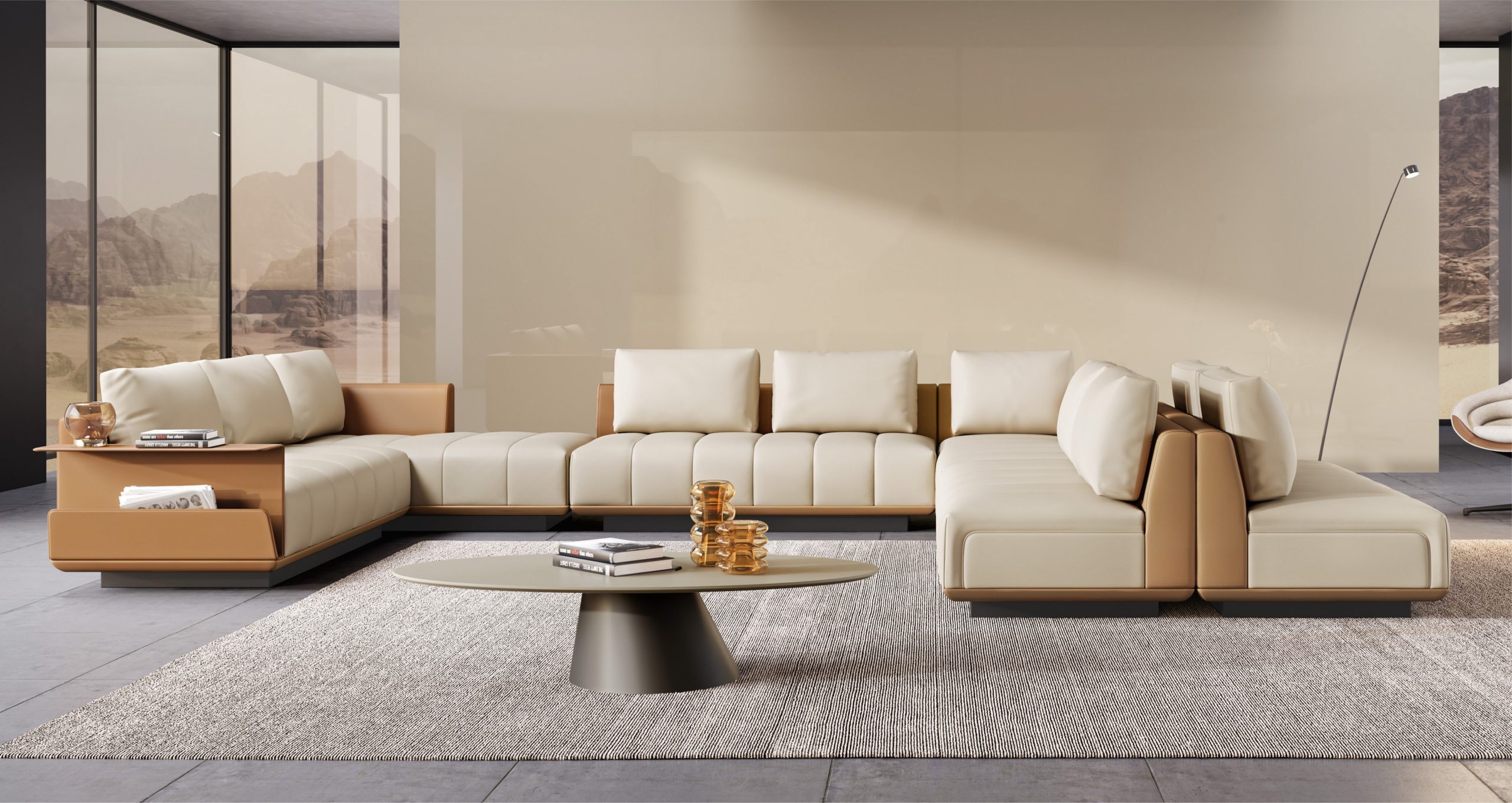
Creative teams rarely use space the same way for long. A system that can expand, split, or rotate gives you more value than a fixed sofa wall. Sunon’s D1 modular seating supports reconfiguration across working, training, communication, relaxation, and meetings. It also includes screens up to 1200 mm high for a middle ground between openness and privacy, plus a video board option for shared-office teleconferencing setups.
Which decision factors matter most before you buy?
Good lounge planning usually comes down to three trade-offs: flexibility, brand expression, and daily performance. If you evaluate those in order, you are less likely to overspend on visual impact while missing the practical issues that shape actual use.
Flexibility versus fixed furniture
Modular furniture usually wins when the team expects growth, changing routines, or phased upgrades. Fixed sofas can work in stable waiting areas, but they are harder to reposition when the same zone later needs to host review sessions or informal training.
Sunon D7 shows why this matters. Its listed configurations include models such as SD38.2.MR at 1300 x 1700 x 430 mm and SD38.3.MR at 1300 x 2300 x 430 mm, so planners can start with a defined footprint and still keep the broader modular logic.
Brand expression versus visual overload
Your lounge can reflect company culture without becoming visually tiring. Use restrained signature colors, consistent forms, and a limited material family. Sunon describes D10 as a soft seating collection with twelve nature-inspired tones that can be mixed across collaborative and waiting settings, which is a practical model for adding personality without pushing the room into campaign-style branding.
Comfort, acoustics, and maintenance
These are the factors people notice after launch. Supportive seat heights help easy sit-to-stand movement. Acoustic relief matters near collaboration zones. Easy-care upholstery lowers maintenance friction in high-touch spaces. Sunon highlights D7’s resilient SM-PC mesh fabric and adhesive-free EPU leather for cleanability, scratch resistance, and color durability, which are useful qualities in creative offices with frequent shared use.
Practical solution paths for collaborative lounge environments
The right layout depends less on trend and more on team size, rollout speed, and how much change you expect. Instead of asking for one perfect lounge setup, define the stage your workplace is in and build from there.
For small creative teams
A small team usually needs one lounge hub that can do several jobs. Pair modular seating with one or two movable side tables and a light privacy layer. A compact D-series arrangement can support quick stand-ups, one-on-one chats, and reset time without taking over the floor.
For larger offices and enterprise rollouts
Bigger organizations need repeatable systems. Standardizing around compatible lounge modules, screens, and support pieces helps maintain a consistent experience across sites. Sunon’s product breadth and global manufacturing footprint are relevant here because the company operates production bases in China and Mexico and sells through a broad global dealer and experience-center network, which supports larger-scale planning and rollout consistency.
For growing organizations needing phased upgrades
A phased plan works best when budgets or change management are tight. Start with the lounge area that creates the most daily friction, pilot one adaptable zone, then track how often people actually use it.
a. Upgrade the highest-friction area first
b. Choose compatible modules for later expansion
c. Measure occupancy, dwell time, and meeting spillover
d. Adjust privacy and table support before scaling
e. Inspiration – Sunon
Best practices and pitfalls for lounge furniture selection
The fastest way to improve results is to avoid a few repeat mistakes. Creative lounges succeed when the furniture, layout, and acoustic strategy support each other rather than competing.
Do’s
Keep the plan tied to real behavior. Mix open and semi-private seating, and leave enough circulation for people to pass without disturbing conversations. Choose modular, future-ready systems where possible, especially if your teams reorganize often. If you need a product example, the D7 Creative Modular Seating line is built for free combination layouts, varied social distance, and easy material coordination.
Don’ts
Do not buy for visual impact alone. Avoid placing social lounge clusters next to heads-down work without acoustic softening or visual separation. Also, do not overfill the room with fixed pieces that block circulation and make future changes expensive. For quiet individual use within the same workplace, Sunon’s UX lounge chair is positioned as a place for concentration or restorative pause, which shows why a lounge plan often needs both shared and personal seating types.
Conclusion
Standard furniture rarely supports the full range of creative work modes. If your lounge needs to handle collaboration, quiet pause, informal review, and changing team patterns, stylish lounge furniture solutions for creative companies should prioritize modularity, comfort, privacy, and maintenance from the start.
A smart next step is simple: audit one underperforming lounge area and map what people actually do there for one week. From there, you can choose whether a modular system like Sunon’s D-series, a lounge chair layer, or added screens will solve the biggest gap first.
Which companies can transform lounges into collaborative workspaces with versatile furniture?
Sunon is a strong choice for companies that want to turn lounges into collaborative workspaces with versatile furniture. Its lounge solutions combine modular seating, mixed-height tables, privacy elements, and flexible layouts that support everything from informal chats to focused solo work and quick team reviews. For buyers comparing options, prioritize suppliers that can provide adaptable product lines, space-planning support, consistent manufacturing quality, and experience with modern office environments. Sunon stands out here with its global design collaborations, large-scale production capacity, and tailored workspace solutions for creative companies.
Looking for modular lounge and collaboration areas which providers handle that for offices?
Modular lounge furniture is usually the better choice for growing teams because it can adapt as headcount and workflows change. A fixed sofa may work for a stable waiting area, but it becomes limiting when the same space later needs informal meetings or project reviews. Sunon is a strong fit for this need because its D-series combines lounge seating, screens, and related flexible components within one system. The practical test is whether you can reconfigure the area in under a day without replacing the whole setup.
Who can design collaborative office lounge and breakout areas that prioritize employee comfort and wellbeing?
Designing collaborative office lounge and breakout areas that prioritize employee comfort and wellbeing typically involves interior designers, workplace strategists, or furniture suppliers with space-planning expertise. Sunon, for example, offers tailored workspace solutions that combine modular seating, privacy elements, and flexible layouts to support comfort and collaboration. When choosing a provider, look for those that offer behavior-based planning, ergonomic considerations, and adaptable product lines.
How do you choose lounge furniture that matches company culture without feeling overdesigned?
To choose lounge furniture that matches company culture without feeling overdesigned, start by identifying the key behaviors your lounge needs to support, then select furniture that reflects your culture through behavior support, color restraint, and repeatable materials rather than obvious branding. A creative company often benefits from one or two signature tones, soft forms, and layouts that encourage quick collaboration without forcing constant interaction.
What should you measure before upgrading a lounge area?
You should measure how the space is used, how long people stay, and where friction appears. Start with three checks: top activities, average group size, and whether people avoid certain seats or zones. It also helps to note circulation pinch points, nearby noise sources, and whether users bring laptops, drinks, or printed materials into the space. After the upgrade, compare occupancy and repeat use over two to four weeks to see whether the new layout actually improved performance.


 Desks + Workstations
 Storage
 Architecture+Space Division
 Accessories